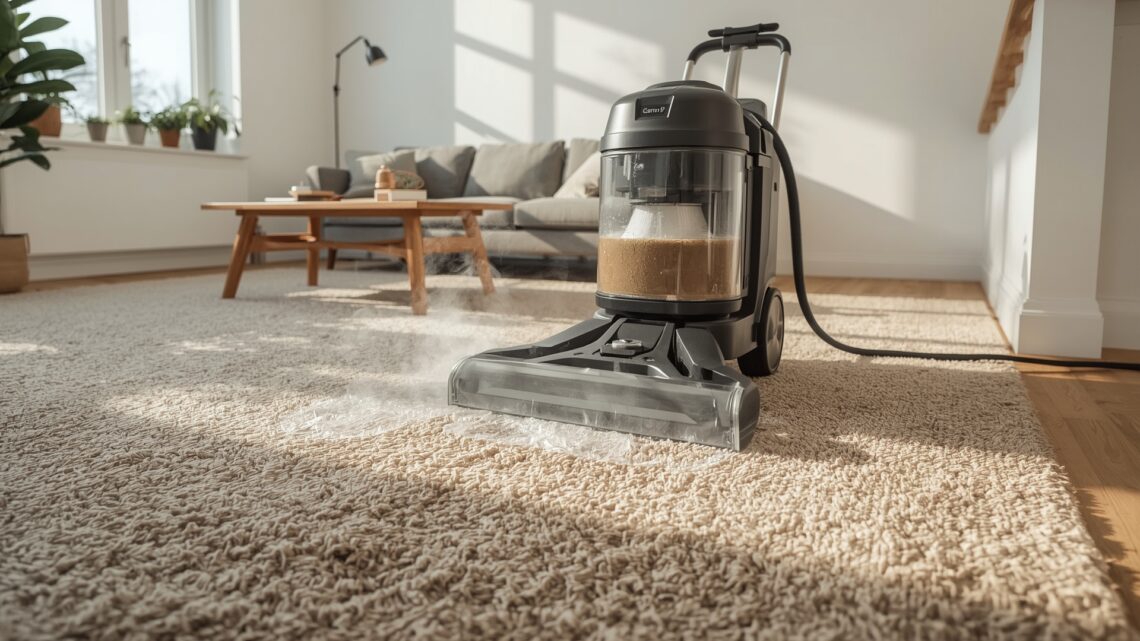
Steam cleaning is one of the most effective ways to deep clean carpet. It pulls out dirt, allergens, and bacteria that regular vacuuming leaves behind. You can rent a machine, buy one, or hire a pro — but doing it yourself at home is more straightforward than most people expect.
This guide walks you through every step: how to prepare your carpet, how to use the machine correctly, how long to wait before walking on it, and when steam cleaning simply isn’t the right tool for the job.
Key Takeaways
- Vacuum before you steam. Dry soil removal first makes steam cleaning dramatically more effective.
- Pre-treat stains before running the machine. Steam alone won’t lift set-in spots.
- Two slow passes beat four fast ones. Speed is the most common mistake people make.
- Drying takes 6 to 24 hours. Airflow and humidity determine where you land in that range.
- Rental machines work well for most homes. Buying only makes sense if you clean more than twice a year.
- Steam cleaning isn’t always the answer. Some stains, carpet types, and damage levels need a different approach.
What Is Steam Cleaning and How Does It Work on Carpet?
Quick Answer: Steam cleaning uses hot water injected deep into carpet fibers, then extracted immediately with strong suction. The heat loosens dirt and kills bacteria. Most machines reach 200°F water temperature and remove up to 97% of common household allergens.
The term “steam cleaning” is a little misleading. The machine doesn’t spray dry steam — it injects hot water mixed with a cleaning solution into the carpet pile. A powerful vacuum then pulls that water back out, along with dissolved dirt and debris.
The process is also called hot water extraction. Professional carpet cleaners use this same method. The difference between a rental machine and a professional truck-mount unit is mostly power — professionals generate more heat and stronger suction.
The heat does two things. It breaks down oily residue that cold water can’t touch, and it kills dust mites, bacteria, and mold spores living in the carpet fibers. That’s why steam cleaning is especially valuable for allergy sufferers or homes with pets.
Hot Water Extraction vs. True Steam Cleaning
True steam vapor machines exist, but they’re different tools. They produce dry steam at very high temperatures and use almost no water. They’re better suited for hard surfaces like tile and grout. For carpet, hot water extraction is the industry standard and what most people mean when they say “steam cleaning.”
Should You Rent a Machine or Buy One?
Quick Answer: Renting makes sense for most homeowners. A rental costs $35 to $60 per day. Buying a consumer machine costs $150 to $400. If you clean carpets twice a year or less, renting is almost always cheaper over time.
| Option | Upfront Cost | Per-Use Cost | Cleaning Power | Best For |
|---|---|---|---|---|
| Rental Machine (e.g., Rug Doctor, Bissell Big Green) | $0 | $35–$60/day | Moderate to high | Occasional cleaning (1–2x/year) |
| Consumer Purchase (e.g., Hoover SmartWash, Bissell ProHeat 2X) | $150–$400 | $5–$10 (solution cost) | Moderate | Frequent cleaning (3+ times/year) |
| Professional Service | $0 | $120–$300 per visit | Very high (truck-mount) | Deep annual cleaning or heavy soiling |
Where to Rent a Steam Cleaner
Most grocery stores, home improvement stores, and big-box retailers offer carpet cleaner rentals. Common rental brands include Rug Doctor and Bissell Big Green. You can also find them at hardware chains like Home Depot and Lowe’s. Call ahead to confirm availability, especially on weekends.
Rental machines come with the cleaning solution included or available for purchase at the counter. Don’t substitute with household cleaners — they can foam too much and damage the machine’s motor.
What Do You Need to Steam Clean Carpet at Home?
Quick Answer: You need a hot water extraction machine, carpet cleaning solution, a vacuum, pre-treatment spray for stains, and clean white towels. Most jobs also benefit from a stiff brush for working pre-treatment into fibers before running the machine.
Full Supply List
- Hot water extraction machine (rented or owned)
- Carpet cleaning solution (use the brand recommended for your machine)
- Vacuum cleaner with strong suction
- Stain pre-treatment spray (enzyme-based works well for organic stains)
- Stiff-bristle brush or carpet brush
- Clean white cloths or towels
- Fans or a dehumidifier (for drying)
- Furniture coasters or aluminum foil squares (to protect furniture legs)
How Do You Prepare Carpet Before Steam Cleaning?
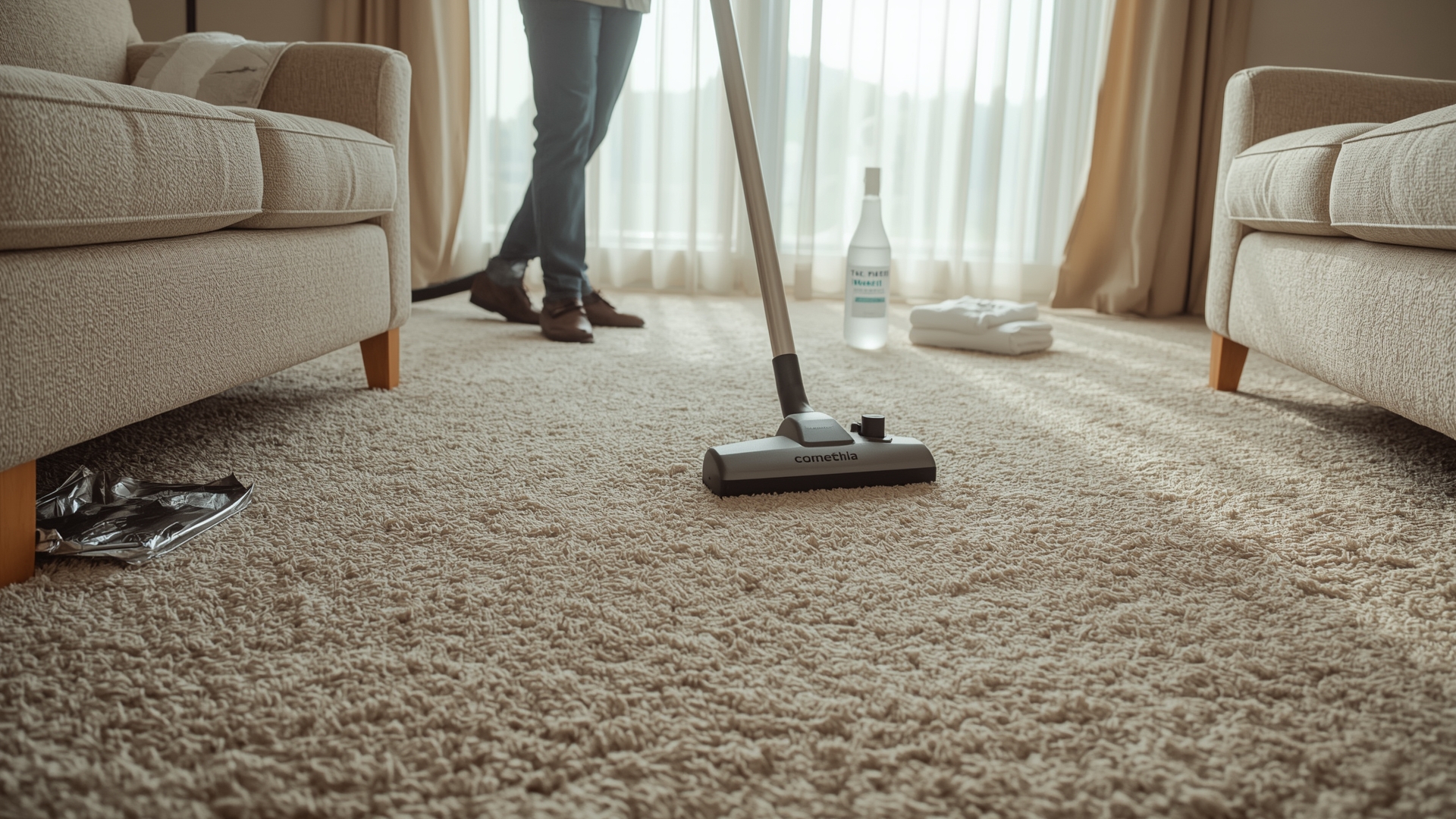
Quick Answer: Remove all furniture and small items from the room. Vacuum the carpet thoroughly in two directions to pull up dry soil. Treat visible stains with a pre-treatment spray and let it sit for 10 to 15 minutes before running the steam cleaner.
Step 1: Clear the Room
Move chairs, end tables, and any lightweight furniture out of the room. For heavier pieces like sofas and beds, place aluminum foil squares or plastic furniture coasters under the legs. This prevents rust stains and moisture damage to wood.
Step 2: Vacuum Thoroughly
This is the most skipped step — and the biggest mistake. Vacuuming before steam cleaning removes dry soil, hair, and debris that would otherwise turn into muddy residue inside your machine. Run the vacuum in two directions: north-to-south, then east-to-west. Give extra attention to high-traffic areas.
Step 3: Pre-Treat Stains
Spray stain pre-treatment directly on spots you can see: coffee spills, pet accidents, tracked-in dirt. Work it gently into the fiber with a soft brush. Let it sit for 10 to 15 minutes. Don’t scrub — scrubbing spreads the stain and damages carpet fibers.
For pet urine stains, an enzyme-based pre-treatment is more effective than standard carpet spray. Enzymes break down the organic compounds that cause odor at the source.
Step 4: Test for Colorfastness
Before running the machine over the whole carpet, test your cleaning solution in a hidden corner. Apply a small amount, wait two minutes, and blot with a white cloth. If the cloth picks up color, the carpet dye isn’t stable and you’ll need a gentler solution or professional help.
How Do You Use a Steam Cleaner on Carpet Correctly?
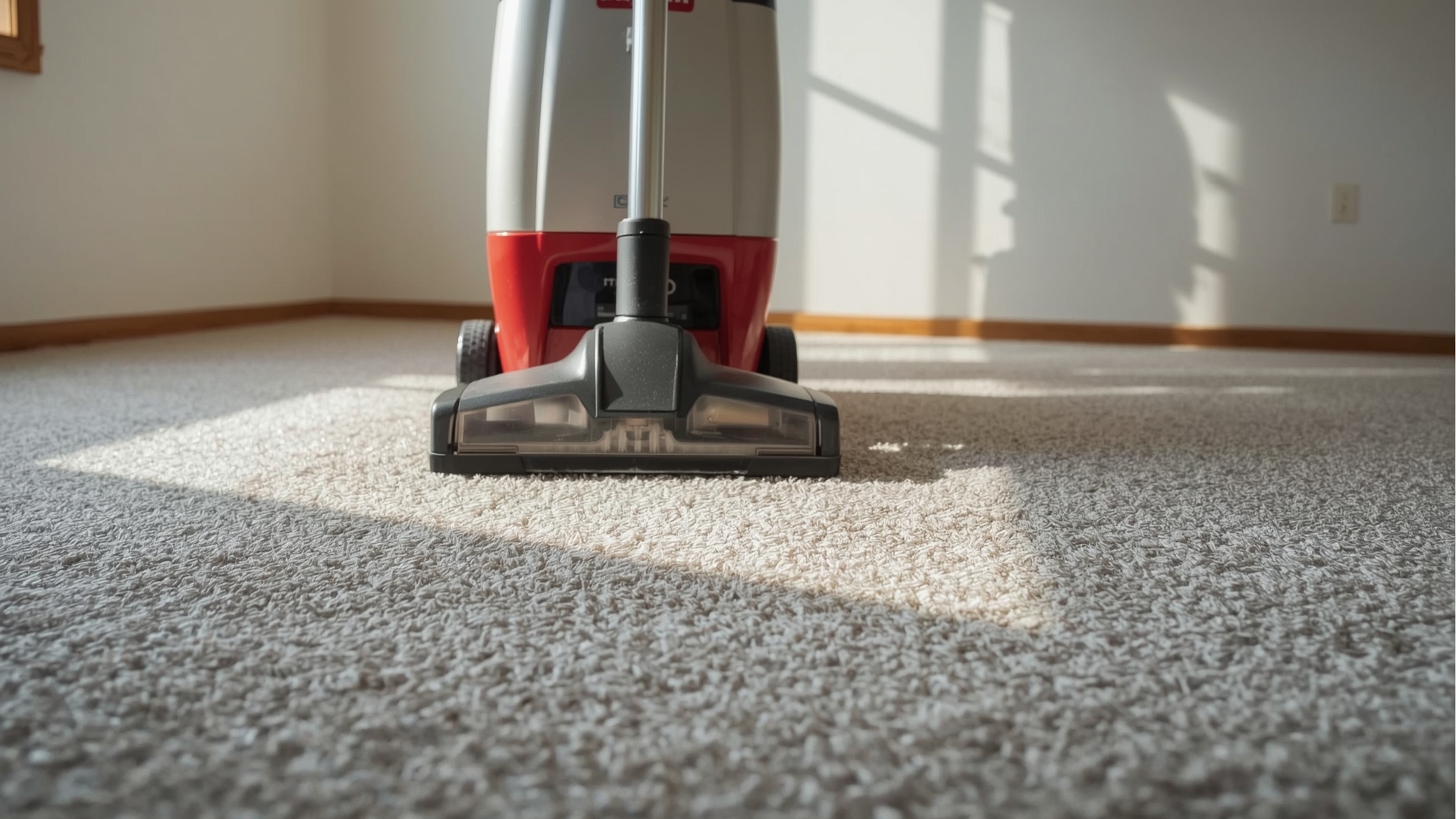
Quick Answer: Fill the machine with hot tap water and the recommended amount of cleaning solution. Start at the far corner of the room and work toward the door. Pull the machine slowly toward you while holding the trigger. Overlap each pass by about 50% for even coverage.
Step-by-Step Machine Operation
- Fill the clean water tank. Use the hottest tap water available. Most machines heat it further internally, but starting hot gives better results. Add cleaning solution at the ratio listed on the label — don’t eyeball it.
- Start in the farthest corner. Work toward the doorway so you’re never stepping on freshly cleaned carpet.
- Press the trigger and pull slowly. The trigger releases the hot water. Pull the machine toward you at about 12 inches per second — much slower than you’d push a vacuum.
- Release the trigger, then push forward. On the forward stroke, keep the trigger released. This is the dry pass, where suction pulls out the water you just injected.
- Overlap each pass by half the machine’s width. This ensures no strip of carpet is under-cleaned.
- Do a second dry pass over heavily soiled areas. If the dirty water tank is filling up quickly in one spot, make an extra suction-only pass over that section.
- Empty the dirty water tank frequently. A full tank reduces suction. Check it every 100 to 150 square feet.
Common Steam Cleaning Mistakes to Avoid
- Moving too fast: Fast passes leave dirty water in the carpet. Slow down.
- Using too much solution: Over-soaping leaves sticky residue that attracts more dirt. Follow the ratio exactly.
- Skipping the dry pass: Forgetting to release the trigger on the forward stroke means wet carpet with less suction.
- Cleaning in one direction only: For very dirty carpet, make a second pass in a perpendicular direction after the first round.
- Walking on wet carpet: Foot traffic on wet carpet re-soils it immediately and flattens the pile.
How Long Does Steam Cleaned Carpet Take to Dry?

Quick Answer: Steam cleaned carpet typically dries in 6 to 24 hours. The actual time depends on airflow, room humidity, carpet thickness, and how much water the machine left behind. A well-ventilated room with fans can dry in under 8 hours.
| Factor | Faster Drying | Slower Drying |
|---|---|---|
| Airflow | Fans running, windows open | Stagnant air, closed room |
| Room Humidity | Below 50% relative humidity | Above 60% relative humidity |
| Carpet Thickness | Low-pile or Berber (6–10 hrs) | Plush or shag (12–24 hrs) |
| Machine Suction Quality | Professional or heavy-duty rental | Weak consumer machine |
| Season/Temperature | Summer, warm temperatures | Winter, cold temperatures |
How to Speed Up Carpet Drying After Steam Cleaning
- Open windows and doors to create cross-ventilation
- Run box fans or ceiling fans at full speed pointed at the carpet
- Run a dehumidifier in the room — it removes moisture from the air and carpet simultaneously
- Turn on the HVAC system (heat or AC) to move air through the space
- Avoid walking on the carpet until it passes the dry touch test: press a dry white cloth firmly to the carpet; if no moisture transfers, it’s ready
What Carpet Types Can You Safely Steam Clean?
Quick Answer: Most synthetic carpets — nylon, polyester, and olefin — handle steam cleaning well. Natural fiber carpets like wool and sisal can shrink or distort with heat and moisture. Always check the manufacturer’s care label before steam cleaning any carpet.
| Carpet Type | Fiber | Steam Clean Safe? | Notes |
|---|---|---|---|
| Nylon | Synthetic | Yes | Most durable; responds very well to hot water extraction |
| Polyester | Synthetic | Yes | Clean well; avoid very high water temperatures |
| Olefin (Polypropylene) | Synthetic | Yes | Good moisture resistance; common in berber styles |
| Wool | Natural | Use caution | Can shrink or felt; use low heat, minimal moisture |
| Sisal / Jute | Natural | No | Water causes permanent damage and fiber breakdown |
| Berber | Looped (any fiber) | Usually yes | Avoid aggressive brushing; loops can snag |
How Do You Remove Stains That Steam Cleaning Didn’t Fully Lift?
Quick Answer: For stains that survive steam cleaning, apply a targeted spot treatment matched to the stain type. Blot with a clean white cloth — never scrub. For stubborn stains like red wine or permanent marker, a professional hot water extraction service with commercial-grade solutions is the next step.
Stain-Specific Spot Treatment Guide
| Stain Type | Treatment Agent | Application Method | Wait Time |
|---|---|---|---|
| Pet Urine | Enzyme-based cleaner | Saturate, cover with cloth | 10–15 minutes |
| Coffee / Tea | Dish soap + cold water | Blot inward from edges | 5 minutes |
| Red Wine | Club soda or 3% hydrogen peroxide | Blot, do not rub | 2–5 minutes |
| Grease / Oil | Baking soda, then dish soap | Absorb with baking soda first, then treat | 15–20 minutes |
| Mud | Let dry completely, vacuum, then treat | Never treat wet mud | Dry fully first |
| Ink | Isopropyl alcohol (70%) | Blot gently with cloth | Immediate action |
When Is Steam Cleaning Not Enough for Carpet?
Quick Answer: Steam cleaning won’t fix structural carpet damage, deep mold growth, or permanently set stains. If your carpet has widespread discoloration, a persistent odor after drying, visible mold, or severe fiber damage, professional remediation or carpet replacement is the right next step.
Signs Your Carpet Needs More Than Steam Cleaning
- Persistent odor after drying: If the smell returns once the carpet is fully dry, the source is below the carpet surface — likely in the pad or subfloor. Steam cleaning doesn’t reach the padding.
- Visible mold or mildew: Surface steam cleaning can’t eliminate mold that has penetrated the carpet backing. Mold in carpet typically requires removal and replacement, not cleaning.
- Matted or crushed fibers: Steam cleaning won’t restore pile that has been permanently compressed. This is a structural issue, not a cleanliness issue.
- Widespread gray discoloration in traffic areas: This often signals oxidation and permanent soil bonding in the fiber. Professional cleaning with specialty oxidizing solutions may help, but fiber degradation is sometimes irreversible.
- Stains that resurface after drying: This phenomenon is called wicking. Moisture from steam cleaning pulls old stains from the padding back up through the fibers as it evaporates. Wicking stains require professional treatment targeting the pad layer.
When to Call a Professional Carpet Cleaner
Professionals have access to truck-mount systems that generate significantly more heat and suction than any rental or consumer machine. They also carry commercial-grade solutions for specific stain chemistry. Call a pro when you’re dealing with pet urine that has soaked into the pad, flood-related soiling, or mold-adjacent situations.
For carpets that are beyond saving, the decision shifts to replacement. A professional can help you assess whether the carpet has enough remaining life to justify the cleaning cost.
How Often Should You Steam Clean Your Carpet at Home?
Quick Answer: Most households benefit from steam cleaning every 12 to 18 months. Homes with pets, children, or allergy sufferers should steam clean every 6 to 12 months. High-traffic areas like hallways may need attention every 6 months regardless of the rest of the carpet’s condition.
Cleaning Frequency by Household Type
- Single adult, no pets: Every 18 months
- Family of 4, no pets: Every 12 months
- Household with one pet: Every 6 to 12 months
- Multiple pets or allergy household: Every 3 to 6 months
- High-traffic entry areas and hallways: Every 6 months regardless of household type
How Do You Maintain Carpet Between Steam Cleanings?
Quick Answer: Vacuum high-traffic carpet at least twice a week. Use entry mats at every exterior door to reduce tracked-in soil by up to 80%. Treat spills within the first 60 seconds — fresh spills blot out with cold water and a cloth; dried spills need chemical pre-treatment.
Between-Cleaning Maintenance Checklist
- Vacuum high-traffic areas 2 to 3 times per week
- Vacuum low-traffic areas once per week
- Place entry mats inside and outside all exterior doors
- Remove shoes at the door to reduce soil load
- Treat spills immediately — blot, never scrub
- Rotate rugs every 6 months to distribute wear evenly
- Keep indoor humidity below 55% to discourage dust mite activity
- Groom carpet pile with a carpet rake after steam cleaning to restore texture
Frequently Asked Questions
Can you use just water in a steam cleaner without solution?
Yes, but plain water is less effective on oily soils and embedded dirt. Cleaning solution helps break down greasy residue and improves soil extraction. For light maintenance cleaning or allergy-sensitive households, a diluted solution at half the recommended concentration is a reasonable middle ground.
Is it safe to steam clean carpet if you have a baby or toddler?
Steam cleaning is generally safe for homes with infants and toddlers. The heat kills bacteria and removes allergens without leaving harsh chemical residues. Make sure the carpet is completely dry before letting children back on it — wet carpet harbors bacteria faster than dry carpet does.
Why does my carpet look worse after steam cleaning?
This usually comes down to three causes: wicking (old stains rising from the pad as the carpet dries), sticky soap residue from using too much cleaning solution, or over-wetting that pushed dirt deeper into the pile. Running a plain-water rinse pass through the machine often resolves the residue problem.
Can steam cleaning remove pet odor from carpet permanently?
Steam cleaning reduces pet odor but rarely eliminates it permanently if urine has soaked into the carpet pad. Enzyme-based pre-treatment applied before steam cleaning reaches more of the odor-causing organic compounds. For urine that has penetrated to the subfloor, pad replacement is typically necessary.
How do you clean the steam cleaner machine after use?
Empty both the clean water tank and the dirty water tank completely. Rinse both tanks with clean water and let them air dry with the caps off. Run a tank of plain hot water through the machine to flush the internal lines. For rental machines, return them clean — most rental agreements require you to empty the tanks before return.
Does steam cleaning shrink carpet?
Synthetic carpets — nylon, polyester, and olefin — don’t shrink from steam cleaning under normal conditions. Wool and other natural fiber carpets can shrink if exposed to excessive heat or left too wet for too long. Always check your carpet’s care label, and use the lowest effective water temperature for natural fiber rugs.

