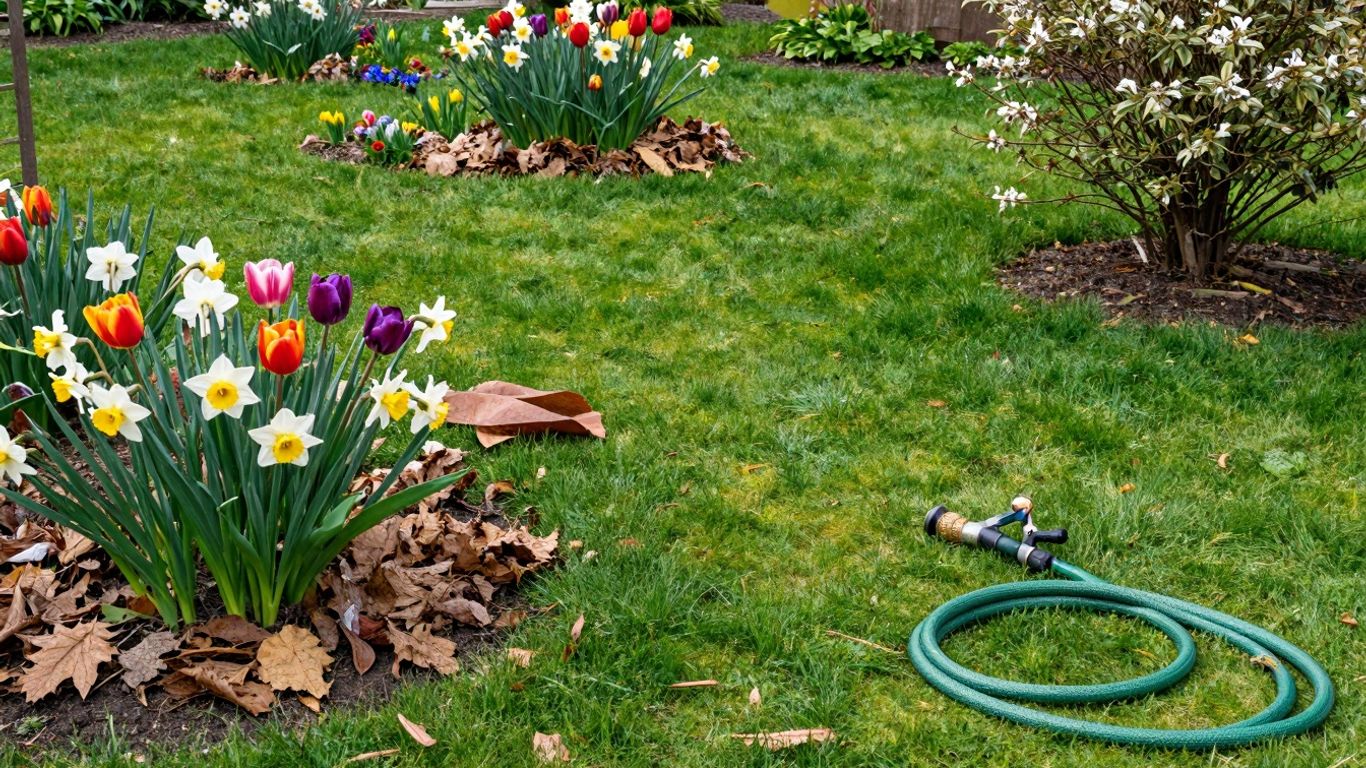
Spring is almost here, and you know what that means – time to get the yard in shape! After a long winter, it’s easy for things to get a bit messy. A good spring yard cleanup is like a fresh start for your outdoor space. It helps everything grow better and look its best. Don’t worry, it doesn’t have to be a huge job. We’ll break it down into simple steps so you can get your yard ready for warmer weather without feeling overwhelmed.
Key Takeaways
- Clear away winter debris like leaves and fallen branches to let your lawn breathe.
- Prune trees and shrubs to remove dead growth and encourage new life, but time it right for flowering plants.
- Revitalize your lawn by raking out thatch, aerating compacted soil, and fixing bare spots.
- Refresh garden beds with weeding and a new layer of mulch for a tidy look and healthy plants.
- Maintain your lawn’s health by mowing at the correct height, fertilizing, and watering properly.
Begin With A Thorough Spring Yard Cleanup
Alright, let’s get this yard party started! After a long winter nap, your outdoor space is probably looking a little… uninspired. Think of this first step as giving your yard a good stretch and a fresh face. It’s all about clearing away the sleepy remnants of winter so everything else can wake up happy and healthy.
Clear Away Winter’s Debris
First things first, we need to get rid of all that stuff winter left behind. We’re talking leaves, twigs, maybe even some forgotten holiday decorations that somehow survived the snow. A good sweep of the yard helps your grass and soil breathe again. It also stops any lingering dampness from turning into mold or inviting pests. If you’ve got a lot of ground to cover, a lawn sweeper can be a real time-saver for clearing leaves and debris.
Tidy Up Perennials and Shrubs
Now, let’s give your plants a little attention. For your perennials, snip off any dead foliage from last year. It looks messy and can harbor diseases. For shrubs, take a look for any branches that look broken or just plain dead. A quick trim here encourages new, healthy growth. Don’t go crazy with pruning just yet; we’ll get to that more later. For now, it’s just about tidying up the stragglers.
Define Garden Beds and Pathways
This is where we start making things look intentional. Take a spade or a sturdy rake and redefine the edges of your garden beds and pathways. This simple act makes a huge difference in how tidy your yard looks. It creates a clean line between your lawn and your garden areas, making everything appear more organized and ready for planting. It’s like putting a frame around a beautiful picture.
Revitalize Your Lawn This Spring
After a long winter, your lawn is probably looking a bit sad and tired. It’s time to give it some much-needed attention so it can bounce back and look great for the rest of the year. Think of it like waking up a sleepy friend – they need a gentle nudge and some good food to get going!
Rake Away Matted Grass and Thatch
First things first, grab your rake. You’ll want to get rid of all those dead leaves, twigs, and any other winter debris that’s settled on your grass. But it’s not just about tidying up. Underneath all that, you might find thatch. Thatch is that dense layer of dead grass and organic stuff that can choke your lawn, blocking water, air, and sunlight from reaching the soil. Gently raking helps break up this layer, allowing your grass to breathe and get the nourishment it needs.
- Start with a sturdy rake.
- Work in sections, focusing on lifting the thatch.
- Don’t be too aggressive; you don’t want to damage the new growth.
Aeration for Better Root Health
If your soil feels really hard or you notice water pooling after rain, your lawn is likely compacted. Aeration is like giving your lawn a spa treatment for its roots. It involves poking small holes into the soil, which lets air, water, and nutrients get down to where the grass roots can actually use them. This is super important for developing a strong root system that can handle heat and foot traffic later on. It’s a bit of work, but totally worth it.
Aerating when the soil is moist but not soaking wet is key for the best results. This makes it easier to pull out soil plugs and allows the holes to stay open longer.
Address Bare Patches with Overseeding
See those thin spots or completely bare areas? They’re an open invitation for weeds. Overseeding is the answer. It’s simply spreading grass seed over your existing lawn, especially in those weaker spots. This helps fill in the gaps, making your lawn thicker and greener. A thicker lawn is also a better defense against weeds because it crowds them out. If you’re not sure where to start, companies like Dash Landscaping can offer advice or even help with this process.
| Area Size | Seed Needed (approx.) |
|---|---|
| 1,000 sq ft | 1-2 lbs |
| 5,000 sq ft | 5-10 lbs |
| 10,000 sq ft | 10-20 lbs |
Prepare Garden Beds for New Growth
Alright, let’s get those garden beds looking sharp and ready for all the new life spring brings. It’s more than just pulling a few weeds; it’s about setting the stage for a really great growing season.
Weed and Divide Overcrowded Plants
First things first, tackle those weeds. They’re sneaky little things, aren’t they? They compete with your good plants for water, sunlight, and all those good nutrients. The best time to get them is when the soil is a bit damp – makes it easier to pull them out by the root. Trust me, getting the whole root is key so they don’t just pop back up. You can use your hands or a small trowel for this. Just make sure you toss the weeds somewhere they won’t sprout again, like the trash or a hot compost pile.
While you’re in there, take a look at your perennial plants. Some of them, like hostas or daylilies, can get pretty crowded after a few years. If you see clumps that are really dense, it’s time to dig them up carefully and divide them. You can split the root ball into smaller sections. These divisions are perfect for filling in bare spots in your existing beds or even sharing with gardening friends. It’s a great way to get more plants for free!
Add a Fresh Layer of Mulch
Once your beds are weeded and any divisions are replanted, it’s time for mulch. This stuff is like a cozy blanket for your garden. It helps keep the soil moist, which means less watering for you, and it also does a pretty good job of keeping new weeds from popping up. Plus, it just makes everything look so tidy and finished.
- Spread a layer of 2-3 inches of mulch around your plants.
- Be sure to keep the mulch a little bit away from the stems of your plants to prevent rot.
- Organic mulches like shredded bark or compost are great because they break down over time and add good stuff to the soil.
If you already have mulch down from last year, just give it a quick rake to fluff it up and refresh the top layer. It’s amazing what a difference a little raking can make. Adding a fresh layer of mulch is a simple step that really makes your garden beds pop and gives them a good start for the season. It’s a good idea to prepare your garden for spring now.
Edge Beds for a Polished Look
This is the step that really makes your yard look like it’s been professionally done. Grab a spade or an edging tool and create a clean, sharp line between your garden beds and the lawn or pathways. This not only looks super neat but also helps stop grass from creeping into your flower beds. It’s a small detail, but it makes a big visual impact. You’ll be surprised how much cleaner and more defined your whole yard looks once you’ve got those crisp edges.
Taking the time to properly prepare your garden beds in the spring is like giving your plants a head start. It means less work fighting weeds later on and healthier, happier plants all season long. Plus, who doesn’t love a garden that looks neat and organized?
Essential Pruning for Trees and Shrubs
Remove Dead or Damaged Branches
After a long winter, it’s common for trees and shrubs to have some branches that didn’t make it. Look for anything that’s broken, cracked, or looks completely dead. Getting rid of these weak spots early is super important for the plant’s overall health and can prevent further damage. Use clean, sharp pruners or a saw for thicker branches. Make your cuts just outside the branch collar, which is that slightly swollen area where the branch meets the trunk or a larger limb. This helps the plant heal properly. It’s also a good idea to remove any branches that are rubbing against each other, as this can create wounds that invite pests and diseases. This task is a key part of your spring yard cleanup.
Prune Spring-Blooming Shrubs After Flowering
Shrubs that bloom in the spring, like lilacs or forsythia, set their flower buds on old wood – meaning they formed them last summer. If you prune them too early in the spring, you’ll end up cutting off all those beautiful blooms. So, the best time to give these plants a trim is right after they finish flowering. This way, you get to enjoy the flowers, and then you can shape the shrub and remove any dead or overgrown branches. It’s a bit of a waiting game, but totally worth it for the blossoms.
Shape Summer-Blooming Varieties
Now, for shrubs that bloom in the summer, like some hydrangeas or roses, they typically flower on new wood – growth that happens in the current season. This means you can prune them in early spring to encourage more growth and, consequently, more flowers. Think of it as giving them a head start. When you prune, try to maintain their natural shape. A good rule of thumb is to keep the bottom of the shrub a bit wider than the top. This helps sunlight reach all the leaves, promoting healthier growth all around. Don’t be afraid to step back and look at the plant from different angles as you prune to get the best shape.
Maintain Your Lawn’s Health
After all that cleanup and prepping, it’s time to really focus on keeping your lawn looking good. This means giving it the right food, the right amount of water, and making sure you’re cutting it properly. It sounds simple, but getting these basics right makes a huge difference.
Mow at the Correct Height
Don’t just hack away at your grass. Mowing at the right height is super important for a healthy lawn. If you cut it too short, it stresses the grass, making it more open to weeds and less able to handle dry spells. For most cool-season grasses, aim for a height of about 3 to 3.75 inches. Remember the one-third rule: never cut off more than a third of the grass blade at any one time. This helps the grass stay strong and thick.
Fertilize for a Strong Start
Think of fertilizer as a spring meal for your lawn. After a long winter, your grass is waking up and needs some nutrients to get going. A balanced fertilizer with nitrogen, phosphorus, and potassium can really help kickstart growth. Just be careful not to go overboard. Too much fertilizer can actually make the grass grow too fast, leading to weaker roots. It’s best to apply it when the temperatures are consistently in the mid-50s Fahrenheit.
Water Deeply and Infrequently
Watering might seem straightforward, but how you do it matters a lot. Your lawn needs about an inch of water each week, whether that comes from rain or your sprinkler. The trick is to water deeply but not too often. This encourages the grass roots to grow down into the soil, making them stronger and more resilient. Shallow, frequent watering just keeps the roots near the surface, which isn’t ideal.
Here’s a quick guide to watering:
- Measure your water: Use a rain gauge or even some empty tuna cans to see how much water you’re actually putting down.
- Aim for consistency: Try to water each section of your lawn for about 30 minutes, maybe twice a week, depending on the weather.
- Watch the weather: If you’ve had a good rain, you might be able to skip watering for a few days.
Proper watering habits are key. They help your lawn develop a strong root system that can withstand stress from heat and dry periods. It’s a simple step that pays off big time throughout the growing season.
Refresh Outdoor Living Spaces
After all that work on the lawn and garden beds, it’s time to turn our attention to the spots where we’ll actually be relaxing and entertaining. Your patio, deck, and outdoor furniture have probably seen better days after a long winter. Let’s get them looking good!
Inspect and Repair Hardscapes
First up, let’s tackle those hard surfaces like patios, decks, and walkways. Give them a good sweep with a stiff broom to clear away any lingering leaves, dirt, or twigs. For any stubborn spots or stains, a scrub with warm, soapy water and a brush should do the trick. Just rinse it off with your garden hose when you’re done. It’s amazing how much brighter everything looks after just a quick clean! While you’re at it, keep an eye out for any loose stones, cracked boards, or wobbly railings. Fixing these small issues now can prevent bigger problems and potential hazards down the road. If you have an irrigation system, now’s the time to slowly turn on the water and check for any broken sprinkler heads or leaks. Small drips can waste a lot of water over time.
Clean Potted Plants
Don’t forget about your potted plants! Even if they’re just sitting there waiting for warmer weather, they can collect dust and grime. Give the pots themselves a good wipe-down. If you have any decorative items like statues or wind chimes, clean those up too. It’s a simple step, but it makes a big difference in the overall feel of your outdoor space. Consider refreshing the look with new cushions or a few colorful pillows for your outdoor seating.
Remove Lingering Holiday Decorations
It’s easy to forget about those leftover holiday lights or decorations tucked away in the garage or shed. Now’s the perfect time to sort through them. If they’re still in good shape, store them neatly for next year. If they’re broken or worn out, it’s time to let them go. Decluttering these items will make your storage spaces more organized and ready for the season ahead. A tidy yard is a happy yard, right?
Ready for a Great Year!
So there you have it! We’ve gone through all the steps to get your yard looking its best for 2025. It might seem like a lot, but taking it one task at a time makes it totally doable. A little effort now means a healthier, happier lawn and garden all season long. Plus, think of all the time you’ll have to just relax and enjoy your beautiful outdoor space. Happy cleaning!
Frequently Asked Questions
When is the best time to start my spring yard cleanup?
You can begin sprucing up your yard as soon as the ground thaws and the snow melts away. It’s best to wait until the soil feels dry. Walking on wet grass can harm it, so keep an eye on the weather and pick a nice, dry day.
What is ‘thatch’ and why should I remove it?
Thatch is a layer of dead grass and other organic stuff that builds up over time. If it gets too thick, it stops water, air, and food from getting to your grass roots. Raking or using a dethatching tool helps get rid of it so your lawn can breathe and grow better.
How much mulch should I add to my garden beds?
A good layer of mulch is about 1 to 3 inches deep. Spread it around your plants, but don’t pile it right up against their stems. Mulch helps keep moisture in the soil, stops weeds from growing, and keeps the soil temperature steady.
What’s the right height to mow my lawn?
For most lawns, aim to keep the grass blades around 3 to 3.75 inches tall. It’s important not to cut off more than one-third of the grass blade at once. This helps the grass stay healthy and can even shade out weed seeds.
How often should I water my lawn in the spring?
Your lawn generally needs about an inch of water each week. It’s better to water deeply and less often rather than shallowly every day. This encourages the grass roots to grow deeper, making the lawn stronger.
What should I do with all the leaves and debris I collect?
You can compost clean leaves and grass clippings to create healthy soil for your garden. However, diseased plant parts or weeds with seeds should be thrown away in the trash to avoid spreading problems.