Most people clean their homes regularly, but regular cleaning and deep cleaning are not the same thing. Wiping counters and vacuuming floors keeps your home looking tidy. Deep cleaning tackles the buildup that surface cleaning never reaches: grease behind the stove, dust inside vents, mildew in grout lines, and grime under appliances.
Knowing how often to deep clean each room keeps your home genuinely healthy, not just visually clean. The right schedule depends on your household size, pets, allergies, and how heavily each space gets used. This guide gives you a clear, room-by-room answer.
Key Takeaways
- Deep cleaning and regular cleaning are different: Regular cleaning maintains appearances. Deep cleaning removes built-up grime, allergens, and bacteria from surfaces regular cleaning never touches.
- Most homes need a full deep clean 2 to 4 times per year. High-traffic rooms like kitchens and bathrooms need attention more often.
- Pets, allergies, and large households shorten the recommended intervals for nearly every room on this list.
- Several tasks get skipped by most homeowners, including oven interiors, refrigerator coils, window tracks, and mattress cleaning.
- Professional deep cleaning makes sense when you lack time, equipment, or when the job involves specialized surfaces or post-illness sanitization.
What Is the Difference Between Regular Cleaning and Deep Cleaning?
Quick Answer: Regular cleaning covers visible surfaces on a weekly or biweekly schedule. Deep cleaning goes further, targeting grease, buildup, and hidden grime in areas like inside appliances, behind furniture, and inside vents, typically 2 to 4 times per year.
Regular cleaning is maintenance. You vacuum, mop, wipe counters, clean toilets, and take out trash. These tasks stop visible dirt from accumulating. They take 30 to 90 minutes for an average home and happen weekly or biweekly.
Deep cleaning is restoration. You remove every item from a cabinet before wiping it down. You scrub grout instead of just mopping the tile. You pull the refrigerator out from the wall and clean the coils underneath. These tasks happen far less often but make a dramatic difference in air quality, hygiene, and the lifespan of your surfaces and appliances.
Regular vs. Deep Cleaning: Task Comparison
| Area | Regular Cleaning Task | Deep Cleaning Task | Frequency Difference |
|---|---|---|---|
| Kitchen | Wipe stovetop surface | Remove burner grates, degrease underneath | Weekly vs. quarterly |
| Bathroom | Wipe sink and toilet | Scrub grout, descale showerhead, clean exhaust fan | Weekly vs. every 1–3 months |
| Bedroom | Change bedding | Wash pillows, vacuum mattress, clean under bed | Weekly vs. every 3–6 months |
| Living Room | Vacuum carpet or floors | Clean upholstery, dust ceiling fans, wash throw pillows | Weekly vs. every 3–4 months |
| Appliances | Wipe exterior surfaces | Clean interior coils, descale, degrease | As needed vs. every 6–12 months |
How Often Should You Deep Clean Your Entire Home?
Quick Answer: Most homes benefit from a full deep clean 2 to 4 times per year, or roughly every 3 months. Households with pets, young children, or allergy sufferers should deep clean more frequently, closer to every 6 to 8 weeks.
A quarterly deep clean (every 3 months) works well for most two-person households without pets. This schedule aligns with seasonal changes, which is why “spring cleaning” became a tradition. Each season brings different challenges: winter traps indoor air pollutants, summer increases dust and pollen, fall sheds leaves and tracked-in debris.
Larger families, pet owners, and people with respiratory conditions like asthma or dust allergies often need to deep clean every 6 to 8 weeks. The math is simple: more people and animals means more hair, dander, bacteria, and dust accumulation in less time.
Deep Cleaning Frequency by Household Type
| Household Type | Recommended Full Deep Clean Frequency | Key Driver |
|---|---|---|
| Single person, no pets | Every 4–6 months | Low traffic, minimal accumulation |
| Couple, no pets | Every 3–4 months | Moderate use across all rooms |
| Family with children | Every 2–3 months | Higher bacteria, food residue, and surface contact |
| Pet owner (1 or more pets) | Every 6–8 weeks | Pet dander, hair, and tracked-in dirt |
| Allergy or asthma household | Every 4–6 weeks | Dust mites, pollen, and mold spore management |
| Work-from-home household | Every 2–3 months | Increased daytime occupancy accelerates buildup |
How Often Should You Deep Clean the Kitchen?

Quick Answer: Deep clean your kitchen every 1 to 3 months. The oven interior needs cleaning every 3 to 6 months. Refrigerator coils should be cleaned once per year. Grease buildup behind the stove should be addressed every 3 months in active cooking households.
The kitchen is the highest-risk room in your home for bacterial growth. Grease, food particles, and moisture create ideal conditions for bacteria like Salmonella and E. coli. Regular wiping helps, but it does not reach the grease that accumulates on cabinet fronts, inside oven vents, under the drip pans of gas burners, or inside the microwave cavity.
Kitchen Deep Cleaning Schedule
| Kitchen Area | Deep Clean Frequency | Key Task | Risk if Skipped |
|---|---|---|---|
| Oven interior | Every 3–6 months | Remove racks, degrease walls and door | Smoke, odors, fire hazard |
| Refrigerator coils | Every 12 months | Vacuum dust from condenser coils | Reduced efficiency, higher energy bill |
| Refrigerator interior | Every 3–4 months | Remove all shelves, wash with warm soapy water | Mold, cross-contamination |
| Exhaust hood filters | Every 1–3 months | Soak in degreaser, rinse | Reduced ventilation, grease fire risk |
| Behind the stove | Every 3–6 months | Pull out stove, clean floor and wall behind | Grease buildup, pest attraction |
| Inside cabinets and drawers | Every 6–12 months | Empty fully, wipe down all surfaces and liners | Crumbs, pests, odors |
How Often Should You Deep Clean the Bathroom?

Quick Answer: Deep clean bathrooms every 1 to 3 months. Grout scrubbing and showerhead descaling should happen every 1 to 2 months in hard-water areas. The exhaust fan, which most people forget, should be cleaned every 3 months to prevent mold and improve air circulation.
Bathrooms accumulate soap scum, mildew, hard water deposits, and bacteria faster than any other room. The humidity from showers creates an environment where mold spores can settle and grow within 24 to 48 hours if ventilation is poor.
Surface cleaning keeps the toilet and sink looking acceptable, but it misses the grout between tiles, the underside of the toilet rim, the exhaust fan blades, and the caulk lines around the tub. These areas harbor mold and bacteria that affect your indoor air quality even when they are not visible.
Bathroom Deep Cleaning Checklist by Task
- Showerhead descaling: Every 1 to 2 months. Soak in white vinegar for 30 to 60 minutes to dissolve mineral deposits.
- Grout scrubbing: Every 1 to 3 months. Use a stiff brush with a baking soda and water paste or an oxygen-based cleaner.
- Exhaust fan cleaning: Every 3 months. Remove the cover, vacuum dust from blades and motor housing.
- Toilet base and behind the tank: Every 1 to 2 months. These areas collect dust, hair, and bacteria that routine cleaning misses.
- Caulk inspection and cleaning: Every 3 months. Clean with a mold-killing solution. Replace caulk if it shows persistent discoloration or separation.
- Medicine cabinet and vanity drawers: Every 6 months. Discard expired products, wipe down all surfaces.
How Often Should You Deep Clean the Bedroom?
Quick Answer: Deep clean your bedroom every 3 to 6 months. Vacuum and rotate your mattress every 3 months. Wash pillows (not just pillowcases) every 3 to 6 months. Dust mites in mattresses and pillows are a leading trigger for nighttime allergy and asthma symptoms.
Most people change their sheets weekly but never clean what is underneath those sheets. The average mattress can harbor millions of dust mites, which feed on shed skin cells. These mites produce waste particles that trigger allergies and worsen asthma.
A bedroom deep clean means going beyond the surface. It means vacuuming the mattress with an upholstery attachment, washing all bedding including comforters and pillow inserts, cleaning baseboards, wiping ceiling fan blades, and pulling furniture away from walls to clean behind it.
Bedroom Deep Cleaning Frequency Guide
| Bedroom Task | Deep Clean Frequency | Notes |
|---|---|---|
| Vacuum mattress | Every 3 months | Use upholstery attachment, sprinkle baking soda first |
| Wash pillow inserts | Every 3–6 months | Check care label; most can go in washing machine |
| Wash comforter or duvet | Every 3–6 months | Use large-capacity washer or take to laundromat |
| Dust ceiling fan blades | Every 1–3 months | Use a pillowcase to contain dust while wiping |
| Clean under the bed | Every 3 months | Vacuum floor and wipe bed frame legs |
| Wipe baseboards and vents | Every 3 months | Major dust accumulation points in bedrooms |
How Often Should You Deep Clean the Living Room?
Quick Answer: Deep clean the living room every 3 to 4 months. This means cleaning upholstery, washing throw pillows and blankets, wiping down electronics, and cleaning window treatments. High-traffic living rooms with pets or children need attention every 6 to 8 weeks.
The living room sees the most foot traffic and the most varied activity. Upholstered furniture traps pet hair, skin cells, food particles, and odors between cushions. Fabric drapes and blinds collect dust that gets redistributed every time someone opens or closes them.
Electronics like television screens, remote controls, and gaming consoles are among the most germ-dense surfaces in any home. A deep clean of the living room addresses all of these, not just the visible floor and surfaces.
Living Room Deep Cleaning Task List
- Upholstery cleaning: Every 3 to 4 months. Vacuum all fabric surfaces including under and behind cushions.
- Wash throw pillows and blankets: Every 1 to 2 months. Most are machine washable on a gentle cycle.
- Clean window tracks and sills: Every 3 to 6 months. These collect dead insects, dirt, and mold-friendly moisture.
- Wipe down electronics: Every 1 to 2 months. Use a microfiber cloth and isopropyl alcohol for screens and remotes.
- Dust blinds or wash curtains: Every 3 months. Vertical blinds can be wiped. Fabric curtains may need washing or steaming.
- Clean light fixtures and switches: Every 3 to 4 months. Light switch plates accumulate bacteria from constant hand contact.
What Deep Cleaning Tasks Do Most Homeowners Skip?
Quick Answer: The most commonly skipped deep cleaning tasks include refrigerator coils, window tracks, exhaust fans, inside dishwashers, garbage disposal cleaning, baseboards, and ceiling fan blades. These are easy to overlook but have real impacts on hygiene, air quality, and appliance efficiency.
These tasks rarely make it onto a cleaning checklist because they do not look dirty until they become a serious problem. By then, mold has spread, appliance efficiency has dropped, or pests have found an entry point.
Commonly Skipped Tasks and Their Consequences
- Refrigerator condenser coils: Dusty coils force the motor to work harder, increasing energy use by up to 25% and shortening the appliance lifespan. Clean annually.
- Dishwasher interior: Food particles and mineral deposits accumulate in the filter and spray arms. Run a cleaning cycle with a dishwasher cleaner tablet every 1 to 3 months.
- Garbage disposal: Ice cubes and coarse salt scrub the grinding chamber. Baking soda and vinegar deodorize. Clean monthly.
- Window tracks: Dead insects, dirt, and moisture accumulate here. Use a stiff brush and vacuum attachment. Clean every 3 to 6 months.
- Washing machine drum: Front-load washers especially develop mildew in the door gasket. Run a hot empty cycle with washing machine cleaner every 1 to 2 months.
- HVAC vents and returns: Dust-clogged vents reduce airflow and redistribute allergens. Vacuum every 3 months and schedule duct cleaning every 3 to 5 years.
- Baseboards: A thin layer of dust on baseboards is constantly disturbed and re-circulated into the air. Wipe with a damp cloth every 2 to 3 months.
- Mattress: Most people never clean their mattress at all. Vacuuming every 3 months and spot-treating stains immediately extends its lifespan and reduces allergen load.
When Should You Hire a Professional Instead of Deep Cleaning Yourself?
Quick Answer: Hire a professional cleaner when a job requires specialized equipment, involves mold or biohazard concerns, follows an illness, or when the time investment exceeds what is practical for your schedule. Professional deep cleaning costs between $200 and $600 for an average home, depending on size and service scope.
DIY deep cleaning works well for most routine tasks. But some situations genuinely call for professional equipment or expertise. Knowing which is which saves you time, effort, and potentially money on repairs or remediation down the line.
DIY vs. Professional Deep Cleaning Decision Guide
| Situation | DIY or Professional? | Reason |
|---|---|---|
| Quarterly whole-home deep clean | Either | Standard tasks manageable with basic supplies |
| Carpet deep cleaning | Professional (recommended) | Hot water extraction removes embedded debris DIY machines miss |
| Post-illness sanitization | Professional | Requires hospital-grade disinfectants and EPA-registered products |
| Visible mold on drywall or subflooring | Professional (required) | Improper removal spreads spores and worsens contamination |
| Oven and hood deep clean | DIY | Manageable with commercial degreaser and standard tools |
| Upholstery and fabric deep cleaning | Professional (preferred) | Steam cleaning extracts allergens and bacteria more effectively |
| Post-renovation cleaning | Professional | Construction dust contains fine silica particles harmful to lungs |
| Whole-home pre-event clean | Either | Depends on time available and comfort with the scope |
Professional deep cleaning costs vary by home size and service scope. A studio or one-bedroom apartment typically runs $150 to $250. A three-bedroom house ranges from $300 to $500. Specialty services like carpet steam cleaning, dryer vent cleaning, or mold remediation are priced separately and depend on square footage and severity.
Signs It Is Time to Call a Professional
- You notice persistent musty odors that do not go away after regular cleaning.
- Someone in your household has been seriously ill and surfaces need hospital-grade disinfection.
- You see visible mold growth covering an area larger than 10 square feet.
- Your carpets have not been professionally cleaned in more than 12 to 18 months.
- You have recently completed a renovation and fine dust has settled throughout the home.
- Your schedule does not allow enough time to do the job properly without rushing.
How Do You Build a Deep Cleaning Schedule That You Will Actually Follow?
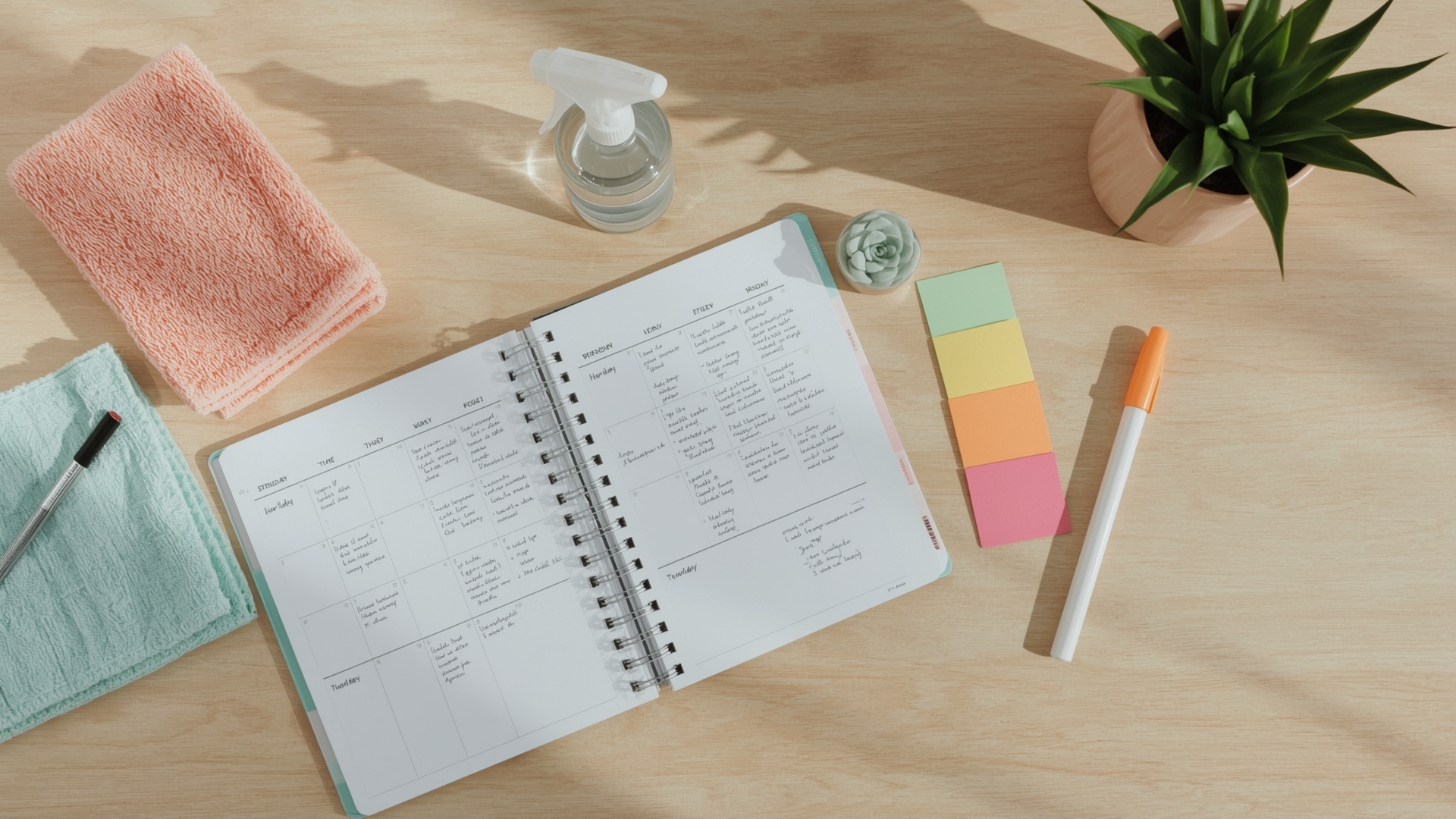
Quick Answer: Build your schedule by assigning deep cleaning tasks to specific months rather than vague seasonal intentions. Tie tasks to events you already remember, like changing smoke detector batteries, rotating mattresses, or cleaning the refrigerator at the start of each new season.
A schedule works when it is specific. “Deep clean the kitchen quarterly” is too vague. “Clean oven interior in January, April, July, and October” is actionable. Tie your tasks to calendar anchors and they are far more likely to happen.
One practical method is the rolling deep clean. Instead of setting aside an entire weekend four times a year, you assign one or two deep cleaning tasks per week on top of your regular routine. Over eight weeks, you cover the whole home. Then you start the cycle again. This approach prevents the mental and physical overwhelm of a full weekend deep clean.
Sample Annual Deep Cleaning Calendar
- January: Deep clean oven, wash all bedding including pillows and comforters, clean refrigerator interior
- February: Clean washing machine and dishwasher, scrub bathroom grout, vacuum mattresses
- March: Clean windows inside and out, clear window tracks, dust blinds or wash curtains
- April: Full kitchen deep clean including behind appliances, refrigerator coils, and cabinet interiors
- May: Steam clean carpets and upholstery, clean ceiling fans and light fixtures
- June: Clean HVAC vents and replace air filters, deep clean bathrooms including exhaust fans
- July: Clean outdoor spaces, garage, and entryway; repeat oven cleaning
- August: Vacuum mattresses, wash all bedding, clean under beds and behind furniture
- September: Full kitchen refresh, clean refrigerator interior, descale showerheads
- October: Clean baseboards and vents throughout the home, wash throw pillows and blankets
- November: Deep clean bathrooms, clean inside cabinets and drawers, declutter storage areas
- December: Wipe down electronics and switch plates, clean garbage disposal, refresh entryway
Frequently Asked Questions
Is deep cleaning once a year enough?
For most homes, once a year is not enough. High-use areas like kitchens and bathrooms need deep cleaning every one to three months. A single annual deep clean may work for a lightly used vacation home or a single-occupant apartment with minimal cooking.
How long does it take to deep clean an entire house?
A thorough deep clean of an average three-bedroom home typically takes eight to twelve hours for one person. Professional cleaning teams can complete the same job in three to five hours by working in parallel across multiple rooms.
What supplies do you need for a home deep clean?
Core supplies include a heavy-duty degreaser, oxygen-based cleaner, white vinegar, baking soda, microfiber cloths, a vacuum with upholstery and crevice attachments, a stiff-bristle brush for grout, and a steam mop if you have hard floors. Having the right tools makes every task significantly faster.
Does deep cleaning help with allergies?
Yes. Deep cleaning removes dust mites, pet dander, mold spores, and pollen that accumulate in mattresses, upholstery, and HVAC vents. For people with asthma or allergic rhinitis, more frequent deep cleaning (every four to six weeks) noticeably reduces symptom triggers inside the home.
How often should you deep clean if you have a dog or cat?
Pet owners should deep clean every six to eight weeks. Pets shed dander and hair continuously, which embeds in carpets, upholstery, and bedding. Vacuuming daily and washing pet bedding weekly helps between deep cleans.
What is the difference between deep cleaning and sanitizing?
Deep cleaning removes physical dirt, grease, and buildup from surfaces. Sanitizing reduces the number of bacteria and pathogens on a surface using EPA-registered disinfectants. Deep cleaning should always happen before sanitizing, because disinfectants are less effective on dirty surfaces.